


In the era of growing environmental awareness and the need to reduce costs, more and more people are considering investing in photovoltaic micro-installations. However, becoming a prosumer often comes with certain challenges that we usually don't consider when comparing offers for photovoltaic installation. Voltage spikes above 253V, emergency inverter shutdowns and unfavorable billing with the power company – these are unpleasant situations that we can fight against by choosing an ECO-OZE-PV optimizer. But does it really work? Is it effective? In this article, we'll take a closer look and present user reviews.
Prosumer problems

Photovoltaic interruptions (253V Problem)
One of the most common reported problems among photovoltaic users is voltage surges. Why is this a problem? To find out the cause, it's worth determining what voltage is considered normal. In Poland, this issue is regulated by the PN-EN 50160 norm. According to this standard, the nominal voltage in the low-voltage grid is 230V, with permissible deviations ranging from -10% to +10%, meaning the voltage can fluctuate between 207V and 253V. The transfer of energy to the grid by prosumers causes a local voltage increase, which is a result of a completely natural and normal cases which rule these processes. To cause a "current flow" from the home to the grid, at least a minimal increase in voltage is necessary on the side where energy is produced, similar like when we lift one dish to pour water into another. The problem is that in many sections of the power grid, these increases result in the voltage exceeding the 253V level. Often, a grid that hasn't been modernized for years is, colloquially speaking, incapable of accepting additional energy from many new sources. Any properly configured PV inverter will automatically shut down when it detects that the voltage exceeds 253V. If the shutdown lasted only a few minutes, no one would see a problem. The problem is that after an emergency shutdown, it takes several minutes to restart the inverters. If net conditions don't improve within that time, the inverter will shut down again after restarting and the prosumer will lose up to several hours of sunlight.
Unfavorable settlement with the power company
Regardless of whether a prosumer settles with the power company under net billing or the older net metering system, they must always consider that not all of the energy they produce will be usable. While net metering is considered more favorable, as the prosumer is only charged a 20% commission from the power company (or 30% for companies), the situation becomes more complicated with net billing. For a prosumer under the old system, the electricity price is essentially irrelevant; the settlement is simply the balance of energy supplied and consumed from the grid, minus the operator's commission. Under the new system (net billing), the basis for settlement is the electricity price, which is variable. In the middle of a sunny day, when there are many solar energy installations on the market, the price drops and can cost, for example, 0,2 PLN per kW. In the evening, when there is no solar production, energy can be billed at a rate of PLN 1.20 per kW.
Auto-consumption
Our ECO-OZE-PV solution utilizes the phenomenon of auto-consumption. It means consuming energy produced by Your own installation directly and continuously. By increasing the share of self-consumption in Your overall energy consumption, we are, in a sense, "killing two birds with one stone." On the one hand, triggering home appliances precisely at the moments when the photovoltaic system is producing energy helps to reduce voltage, while on the other hand, by consuming energy continuously, we avoid billing the power company.
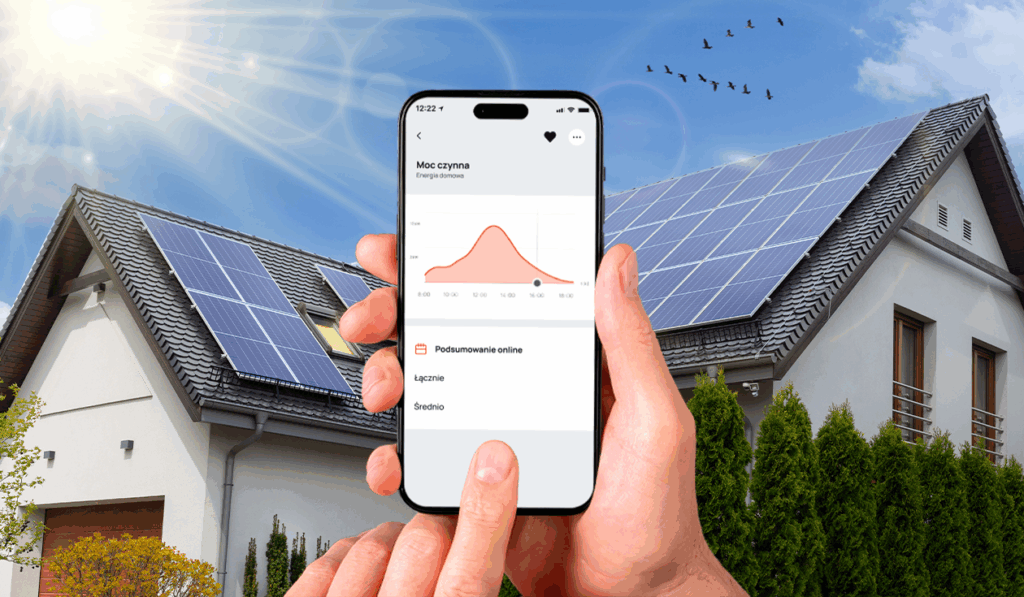
ECO-OZE-PV was developed in response to a specific problem. The goal was to make the users free from the unpleasant consequences of voltage surges, and thus, system interruptions. The optimizer monitors voltage on three phases and since voltage overshoots usually occur on one phase, the device switches the load on that phase. This specific design avoids triggering additional load at times when it could exceed the temporary production value.
But does it work? What if the boiler heats the water and the voltage is still high? Learn our users' opinions and join our group where we share experiences using the ECO-OZE-PV optimizer in practice (Zamel ECO-OZE-PV LAVVA Smart Home | Facebook).Zamel eko-oze-pv Lavva Smart Home | Facebook).
Evidence of ECO-OZE-PV's effectiveness
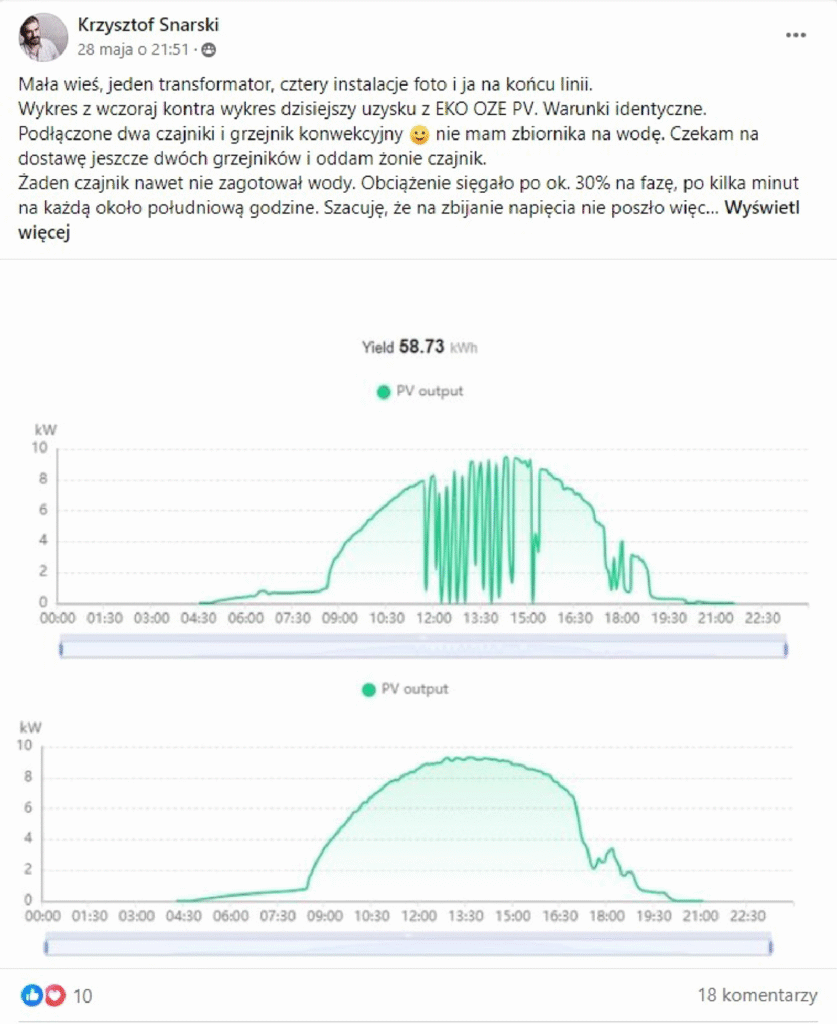
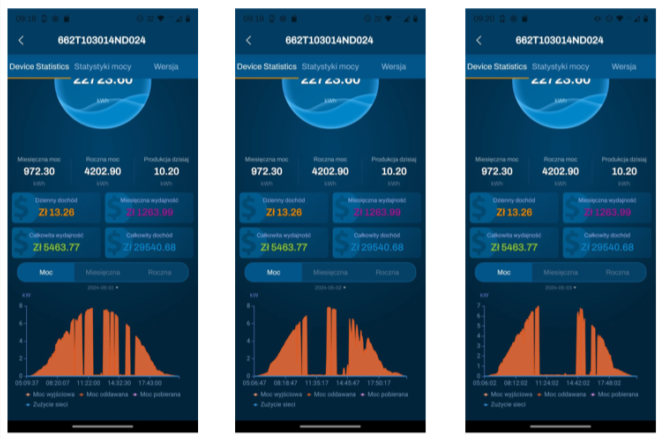
Our users often notice interrupted graphs like the one above. Any sudden decrease in the graph indicates a temporary shutdown, after which the inverter needs several minutes to regain full efficiency.
Graphs
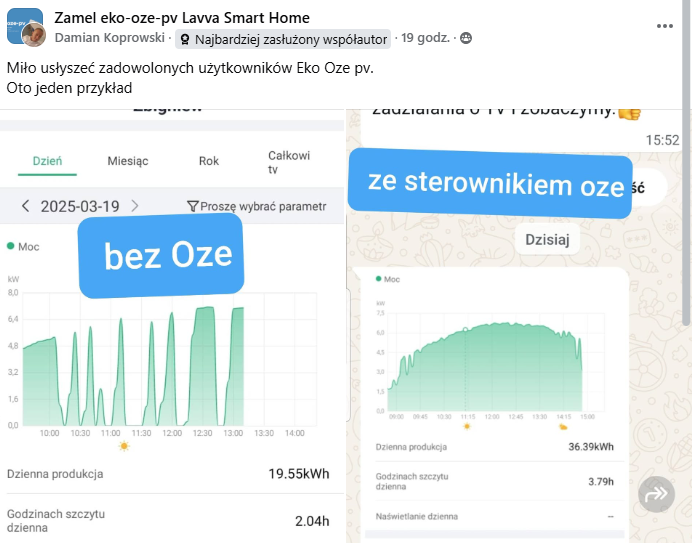
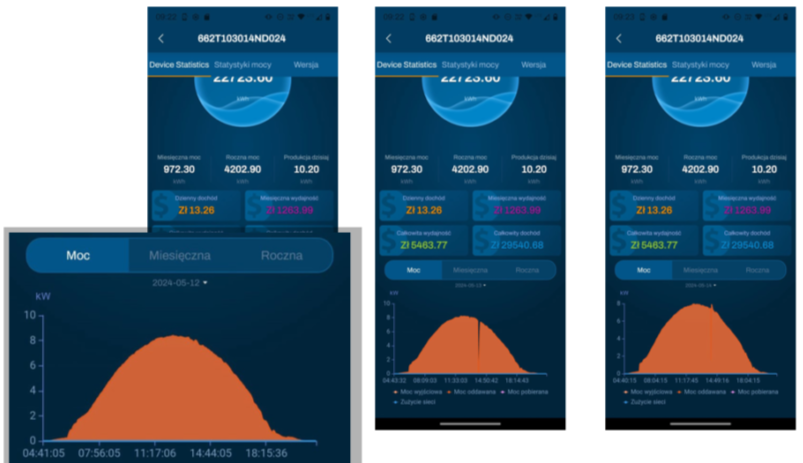
Because our optimizer triggers home appliances to reduce the voltage, some users are concerned that the potential benefit will be less than what we use to operate the heater in the storage tank. However, practice proves that maintaining continuous operation provides an unquestionable benefit for the prosumer.
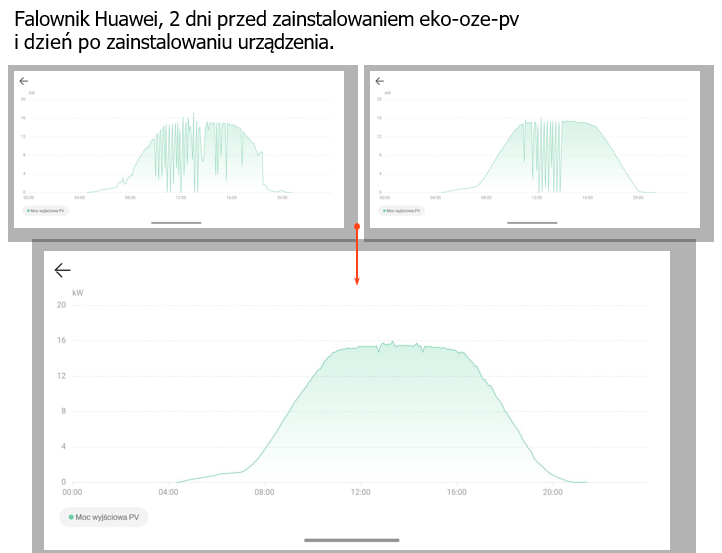
Graphs recorded before ECO-OZE-PV installation from 01/05/2024 to 03/05/2024.
ECO-OZE-PV installation on May 11, 2024. Charts from May 12, 2024 – May 14, 2024.
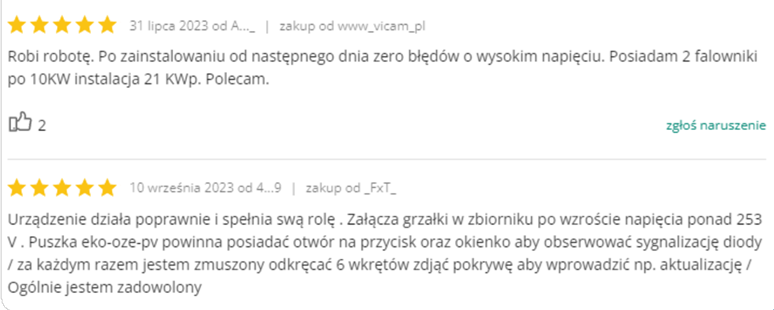
Opinions on sales websites
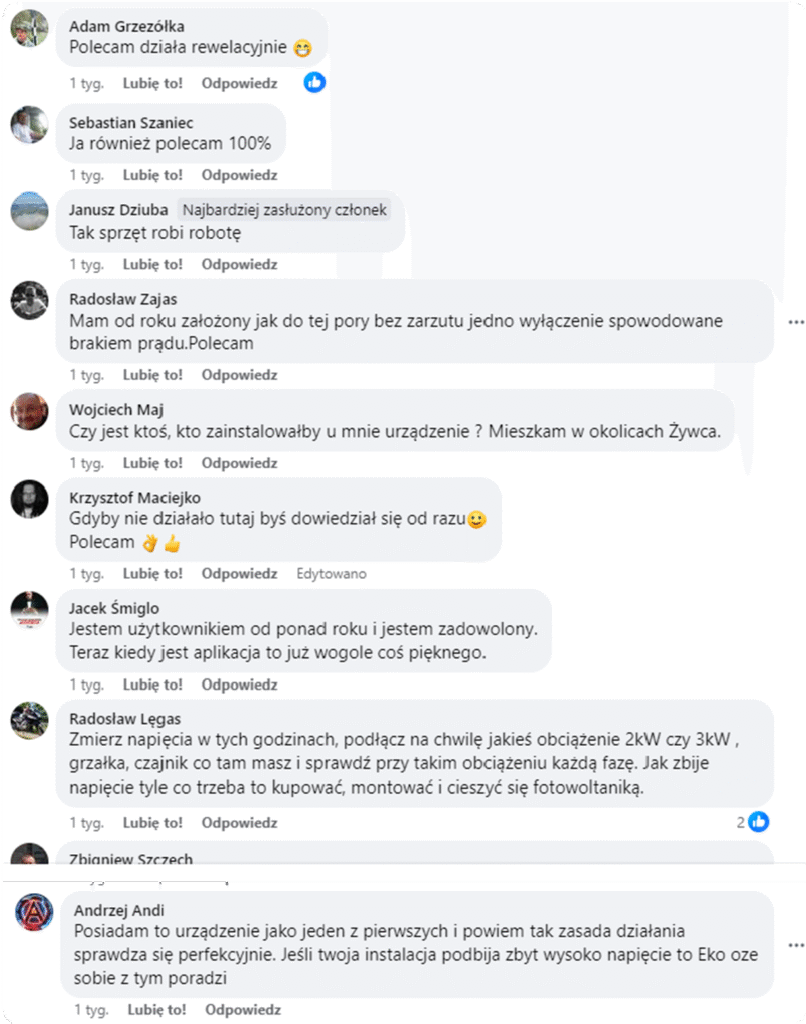
If you have questions about ECO-OZE-PV and how to lower the voltage, join our Facebook group! Zamel eko-oze-pv Lavva Smart Home | Facebook (https://www.facebook.com/groups/zamelekoozepv/)– enter the link or scan the code below.